
29 Dec Harmony or Chaos? The Foolproof Art of Matching Your Flooring and Paint for the Home of Your Dreams
Choosing the perfect flooring and the ideal wall color are major steps. But the true secret to an enchanting interior design isn’t in the individual pieces—it’s in the perfect conversation they have with each other. When the floor and paint complement one another, they create a solid, harmonious, and personality-filled foundation. When they clash, they create visual chaos.
The good news? Achieving that perfect combination isn’t magic; it’s technique. In this guide, we unveil the 7 secrets interior designers use so you can create spaces with impeccable color balance yourself.
1. The Starting Point: Which to Choose First, Flooring or Paint?
This is the million-dollar question. The experts’ golden rule is clear:
Prioritize the flooring first. Flooring is a long-term investment, more expensive, and harder to change. Paint, on the other hand, is the most economical and versatile accessory for refreshing a space.
First, choose the material and tone of your flooring (light wood, dark wood, concrete, marble…), and then select the paint palette that best communicates with it.
2. Choose Your Strategy: Harmony or Contrast
Before you pick colors, define the effect you’re after.
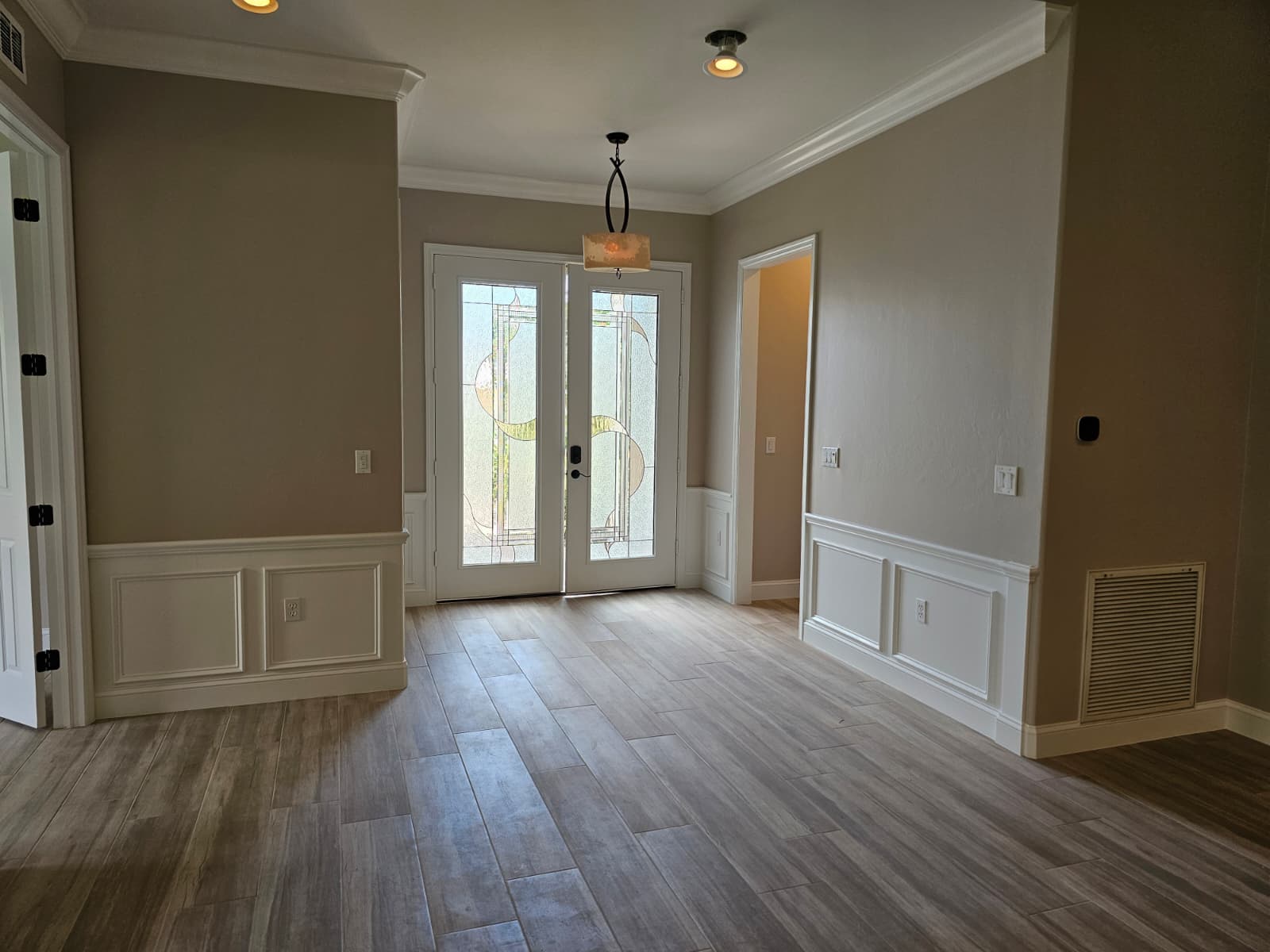
- Strategy 1: Harmonious Analogy. This involves choosing tones that are close to each other on the color wheel. For example, a warm wood floor with walls in beige, ivory, or a soft earthy color. The result is subtle, calm, and elegant. It’s ideal for creating relaxing environments in bedrooms or living rooms.
- Strategy 2: Controlled Contrast. This strategy plays with opposites to create a dramatic and modern impact.
- Dark Floor + Light Walls: A timeless, foolproof classic. A dark wood floor or black tile looks spectacular with white, light gray, or beige walls. The light walls maintain brightness, and the dark floor adds depth and elegance.
- Light Floor + Dark or Colorful Walls: A rising trend. A natural or whitewashed oak floor is the perfect canvas for daring with walls in navy blue, emerald green, or even a bold terracotta. The contrast is modern and full of personality.
3. The Undertone of Wood: Warm vs. Cool (The Key Differentiator)
Not all woods are the same. Identifying their undertone is crucial for choosing the right paint.
- Warm-Toned Woods (golden oaks, walnut, bamboo): Have subtle yellow, orange, or red reflections. Pair them with warm paints: off-whites, creams, beiges, ivories, and earthy colors.
- Cool-Toned Woods (gray oaks, whitewashed woods, some vinyl floors with a gray base): Have gray or bluish reflections. Paint them with cool colors: pure whites, blue-grays, sage greens, and pale blues.
Common mistake: Pairing a warm-toned wood with a cool white (with a blue base) will create a feeling of imbalance. Avoid it!
4. The 60-30-10 Rule: The Secret Code to Perfect Balance
This is the golden rule for color distribution in interior design.
- 60% Dominant Color: This is usually the flooring.
- 30% Secondary Color: This would be the walls.
- 10% Accent Color: Provided by cushions, curtains, artwork, or a rug.
Your flooring occupies 60% of the visual field, so let it be the star. Choose a wall color (30%) that complements it without stealing the spotlight.
5. Draw Inspiration from Nature and Materials
Look at the flooring you’ve chosen and seek inspiration from its origin.
- Polished Concrete or Microcement Flooring: It’s neutral and industrial. It allows total freedom. It works with grays, blacks, and whites for an urban look, or with earthy colors and wood to soften it.
- Marble Flooring or Ceramic that Imitates It: Elegant and veined. Pull a color from its veins for your walls. If the marble has gray veins, paint a wall in that same shade of gray for a luxurious, integrated look.
6. The Finishing Touch: The Rug as a Chromatic Bridge
If you’re unsure or your combination isn’t quite convincing you, a rug is your best ally. It acts as a perfect bridge between the floor and the wall. You can choose a rug that contains both the color of the floor and the color of the wall, visually uniting both elements.
7. Test, Always Test!
Never choose a paint color just from a swatch or in the store. The light in your home is unique.
- Buy small sample pots of your 2-3 favorite colors.
- Paint large squares on several walls (one that gets a lot of light and one that is in shadow).
- Observe them for 48 hours at different times of the day. You’ll see how they change and which one adapts best.
Conclusion: Your Home, Your Color Story
Matching flooring and paint isn’t about following strict rules, but about understanding the relationship between colors. Your flooring sets the base, and the paint is the voice that gives the space character and emotion.
Remember:
- Dark Floor + Light Walls = Elegance and brightness.
- Light Floor + Dark Walls = Modernity and personality.
- Floor and Walls in Analogous Palettes = Calm and harmony.
Take the risk, trust your eye, and create a home that not only looks good but feels perfectly unified.